CEQA study finds a disconnect between statutory exemptions and usage
By Belinda Torres, a 2026 Ronald O. Loveridge Summer Fellow,and Melissa Sparks-Kranz, legislative advocate (environmental quality)
Cal Cities worked with a group of UC Davis graduate students to look at statutory exemptions to the California Environmental Quality Act (CEQA) and how often they are used for specific projects. The report suggests there is a disconnect between the statutory exemptions the Legislature has passed and their actual usage.
CEQA exemptions remain an ongoing topic among the Legislature and, increasingly, everyday Californians. This year, voters rejected Proposition 45, which would have streamlined environmental review decisions and added shot clocks for a range of essential projects. The Legislature is poised to take up more CEQA changes in 2027.
The UC Davis Environmental Policy and Management Policy Clinic conducted the study. The report does not represent a policy position of Cal Cities. However, the report provides relevant information and analysis for future consideration.
New statutory exemptions increased sharply in 2025
The research found that lawmakers enacted 65 CEQA statutory exemptions between 2010 and 2025. The Legislature added new exemptions relatively slowly during the first 14 years, with fewer than 10 exemptions added in most years. (See Figure 1 below.) The number of exemptions significantly increased in 2025, when lawmakers passed 26 new exemptions under the 2025 budget package through AB 130 (Wicks) and SB 131 (Wiener).
The budget package included some of the state’s most robust statutory exemptions to date. New types of housing developments, along with wildfire risk reduction, broadband, water and wastewater, rail infrastructure, day care centers, rural health clinics, and food pantry projects can now be exempted under the state’s environmental law.
Housing projects are by far the most common statutory exemption type. However, wildfire prevention projects are quickly becoming another major exemption area, as the Legislature looks to reduce catastrophic wildfire risks.
There is misalignment between exemptions and their actual usage
The data indicates there may be a disconnect between the types of statutory exemptions passed and their actual usage. For example, water supply resiliency and aging infrastructure are at the forefront of California’s climate challenges, but such exemptions are rarely used. The top five most cited exemptions include broadband, low-emission transportation, rooftop and parking lot solar, wildlife restoration projects, and short underground pipelines. (See Figure 2 below.)
Notably, housing projects exemptions, including affordable housing, are not among the most cited exemptions, even though they continue to be a central focus of the Legislature.
The report notes that existing categorical exemptions account for the most exemptions used in practice — not those passed by the Legislature. (Categorical exemptions are broader exemptions approved by the Secretary of the Natural Resources Agency that have been part of CEQA since the 1980s.) Of the tracked exemptions, the most used exemption is a categorical one (not statutory) for minor changes and repairs to existing facilities, accounting for about 40% of all exemptions submitted to the state database.
A rarely used statutory exemption may not necessarily be ineffective. However, the report suggests the need to evaluate how statutory exemptions are used. Lawmakers should consider sunsetting those statutes if such exemptions are not used. Unused exemptions can add complexity to the legal considerations surrounding whether to go through the full environmental review process or not. Additionally, exemptions have been perceived as eroding CEQA, turning it into “Swiss cheese.” A sunset provision would provide a set date when an exemption expires, unless the Legislature chooses to extend it.
Additional analysis needed for recent housing exemptions
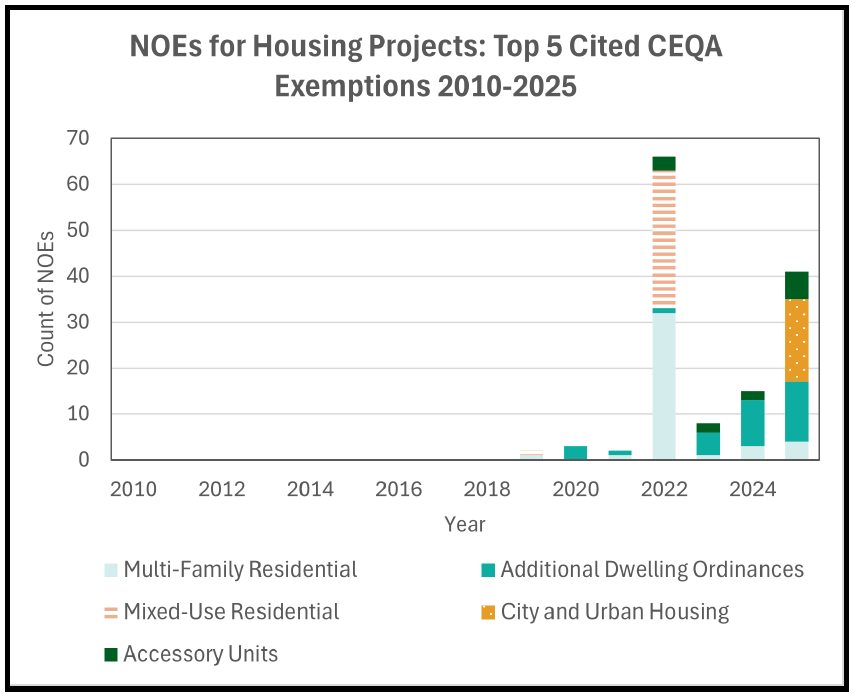
The report calls for further analysis to evaluate the use of housing exemptions. It found that the categorical exemption for infill development — which some scholars have labeled as “underutilized” — was used 591 times in 2025 alone. All other statutory housing exemptions were used 168 times over the 15-year study period. (See Figure 3 below.) Of all the housing exemptions the Legislature has passed, they are used far less than the infill development categorical exemption that already exists.
“Increasingly specific exemptions for housing projects may be less effective or present diminishing returns in encouraging new housing compared to promoting the use of exemptions that already exist,” the report notes.
Similarly, two exemptions for housing were used extensively in 2022, but rarely in the following years. The report notes that local governments have consistently used the statutory exemption for accessory dwelling units. It will take additional time and analysis to understand whether the 2025 housing exemptions are being used effectively.
Exemption usage should become clearer over time
The analysis merely scratched the surface of CEQA exemptions and their use patterns. For example, the state’s CEQAnet database did not require the submission of exemptions until 2024. Instead, project leads could submit their exemption notices to either the county or the state. This change will give cities, lawmakers, and researchers a more robust and accurate accounting of CEQA exemptions as more exemptions are submitted to the state database.
Cal Cities will continue to review and engage on future CEQA legislation as it is introduced. For questions about this report, please contact Cal Cities Legislative Advocate Melissa Sparks-Kranz.
FIGURE 1: CEQA Statutory Exemptions by Year and Project Type
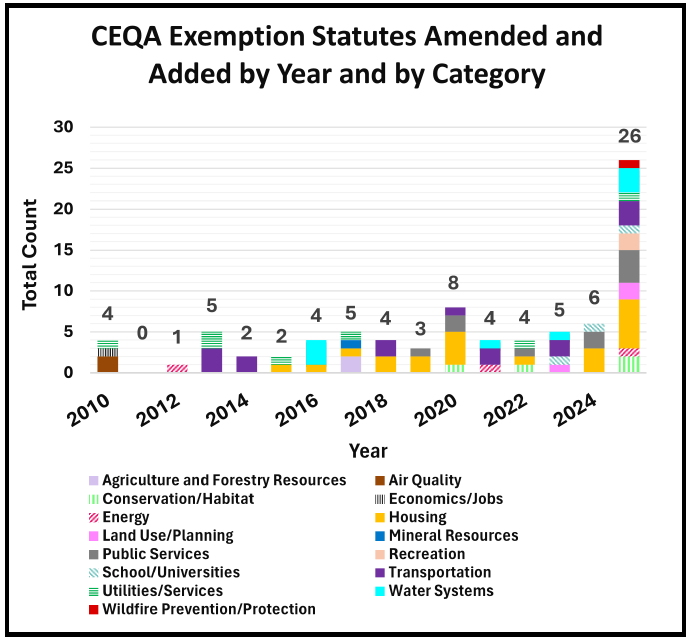
FIGURE 2: Top 5 Cited CEQA Statutory Exemptions from 2010 to 2025
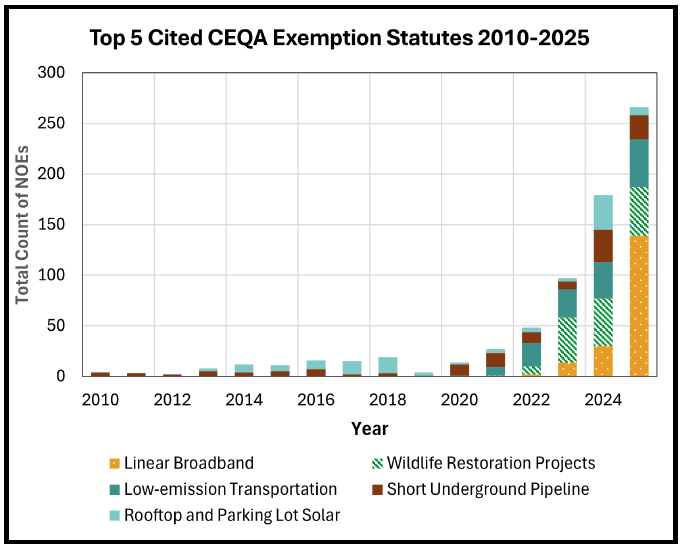
FIGURE 3: All Cited Statutory Exemptions from 2010 to 2015 for Housing Projects
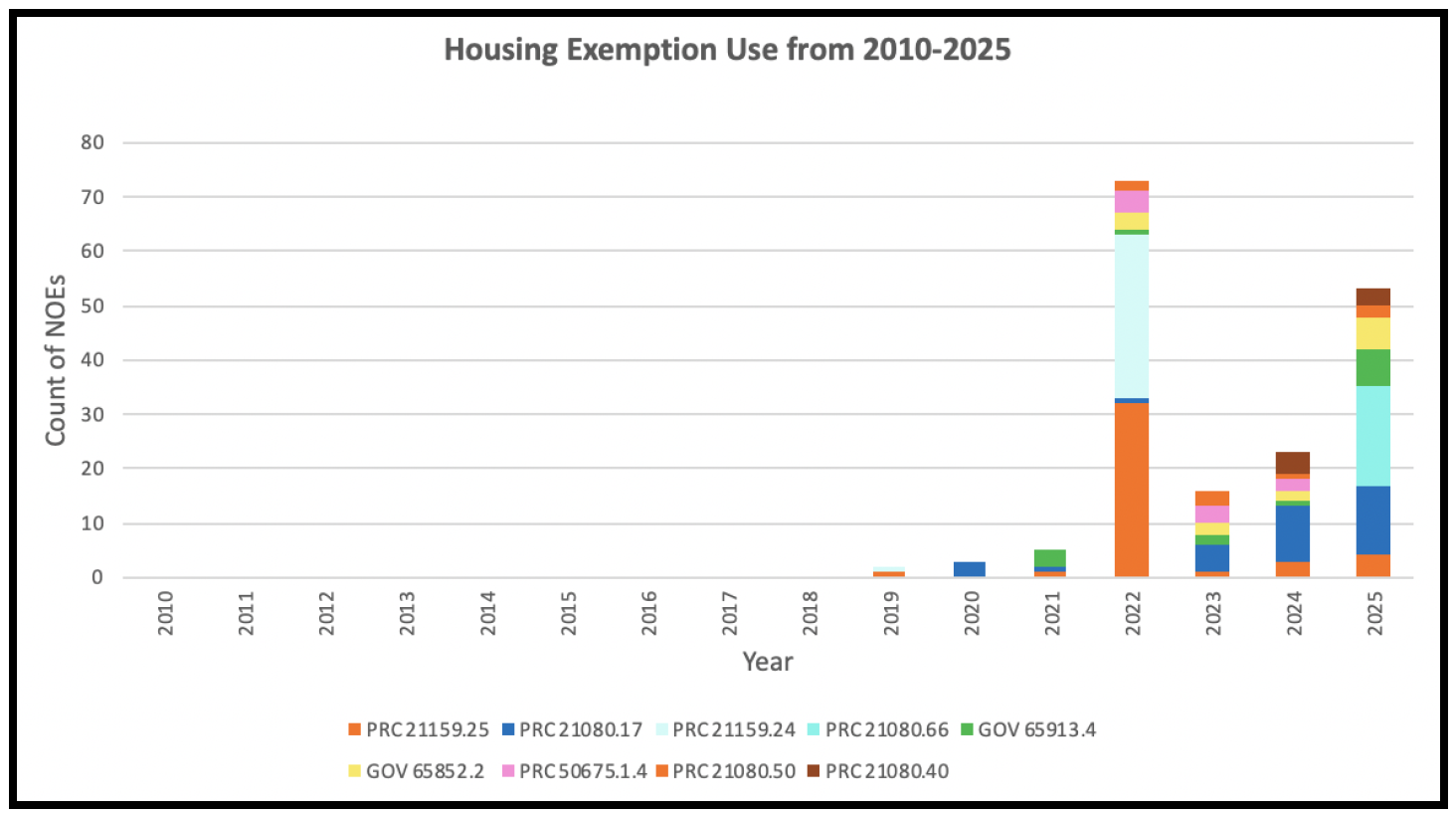
FIGURE 4: Top 5 Housing Project Statutory Exemptions Cited from 2010 to 2025