
Baldwin Park’s outsized efforts to tackle a housing deficit yield big results
Guest article by Jackie Krentzman, freelance writer and editor
.png?sfvrsn=ca52a9c9_1) A sustained push for more market-rate and affordable housing in Baldwin Park is paying off: The number of homeless residents in the city has decreased by nearly 70% since 2020. It’s a big change for the mid-sized city in the heart of the San Gabriel Valley, where the median income of $76,000 isn’t even remotely
enough for a down payment.
A sustained push for more market-rate and affordable housing in Baldwin Park is paying off: The number of homeless residents in the city has decreased by nearly 70% since 2020. It’s a big change for the mid-sized city in the heart of the San Gabriel Valley, where the median income of $76,000 isn’t even remotely
enough for a down payment.
“Housing is the number one factor for stability and positive life outcomes for those already struggling in working-class communities,” says Mayor Emmanuel J. Estrada. “When people can't afford housing, that often means they can't afford healthcare. … Unstable housing may mean that their children move from school to school which harms their educational prospects.”
Bryan Wong, CEO of the San Gabriel Valley Habitat for Humanity, says the city’s “can-do” attitude is responsible for much of its progress. “Like every city, Baldwin Park is understaffed,” he said. “But it doesn’t say, ‘We are under-resourced; we can’t do this.’ Instead, it asks, ‘OK, how do we make this work?’ They have embraced the new rules and are figuring out the best path to meeting the state’s intent.”
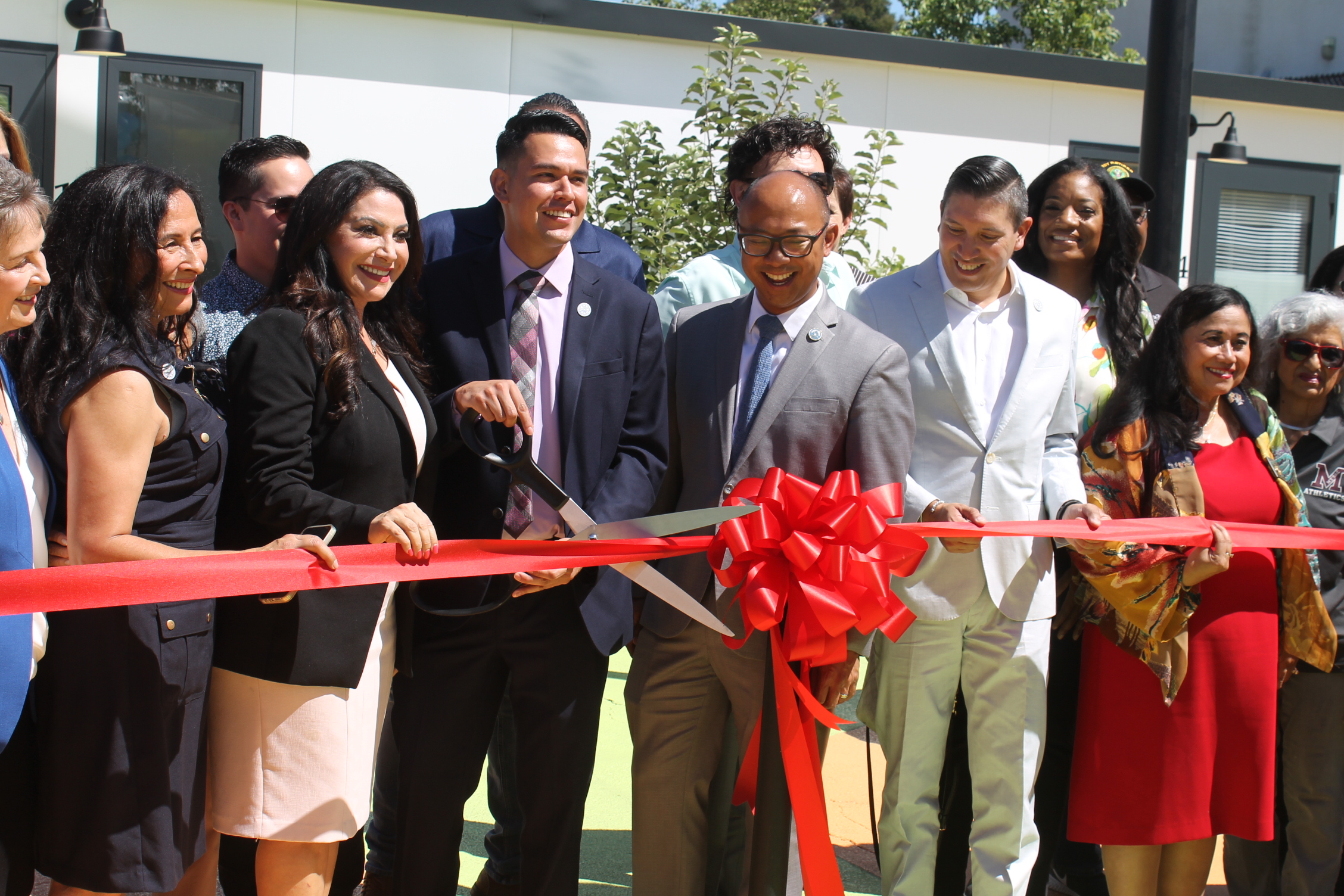
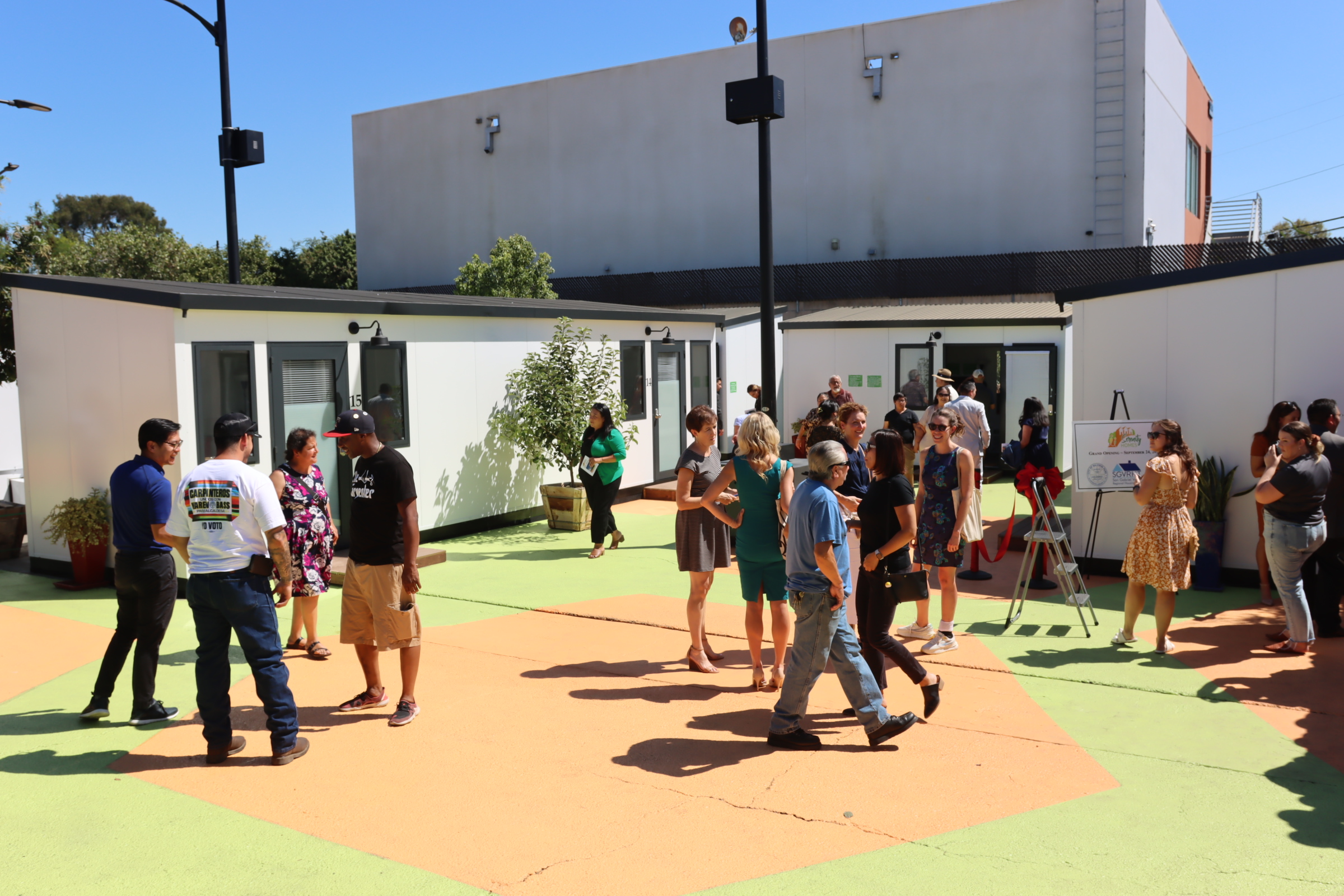
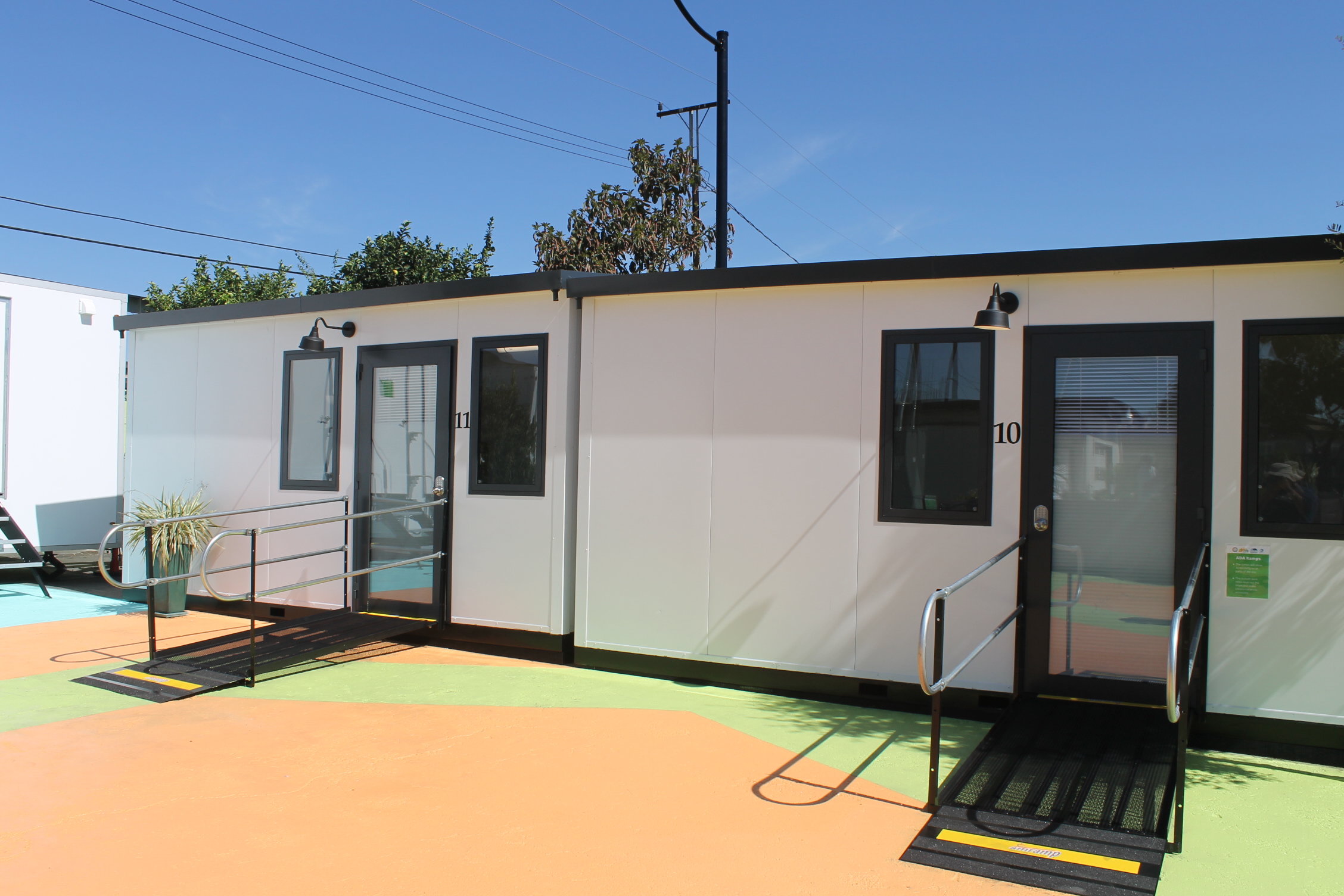
In many ways, Baldwin Park is serving as a model for how cities can help people experiencing homelessness stabilize and access housing. One such venture, Esperanza Villa, is the region’s first tiny home village. The 25-unit heated and air-conditioned pallet shelter has provided emergency housing and services for adults since 2021.
Estrada is especially proud of the cities’ efforts to find supportive housing for seniors experiencing homelessness.
“We found that many of the residents who were experiencing homelessness were seniors, in particular Latino seniors,” he said. “Our tiny home shelters have not only brought some off the street: It prevented them from living there in the first place. For example, we learned about a man who had been renting a room in a house but was asked to leave. He had nowhere to go — then Esperanza Villa opened up and he moved in.”
The village is couple- and pet-friendly, which Estrada says is unusual and eliminates some of the common barriers to entry. A partnership with the San Gabriel Valley Regional Housing Trust and the San Gabriel Valley Council of Governments helped fund the project.
Esperanza Villa is one of many such projects. Serenity Homes, a tiny home village for families experiencing homelessness developed with regional government associations, welcomed its first tenants a year later. Opening later this year is Central Metro Place, with 54 units for low-income seniors. The four-story complex will boast a gym, laundry facility, arts and crafts room, gardening area, and on-site social services.
The city is also developing several permanent affordable housing developments with Habitat for Humanity. Baldwin Park has funneled $5 million of its American Rescue Plan Act funding to joint projects with the nonprofit. One of the advantages of partnering with an established organization like Habitat for Humanity is that the city can take advantage of the nonprofit’s multiple funding streams.
“For every dollar we've invested, Habitat has been able to bring in three more,” said Estrada.
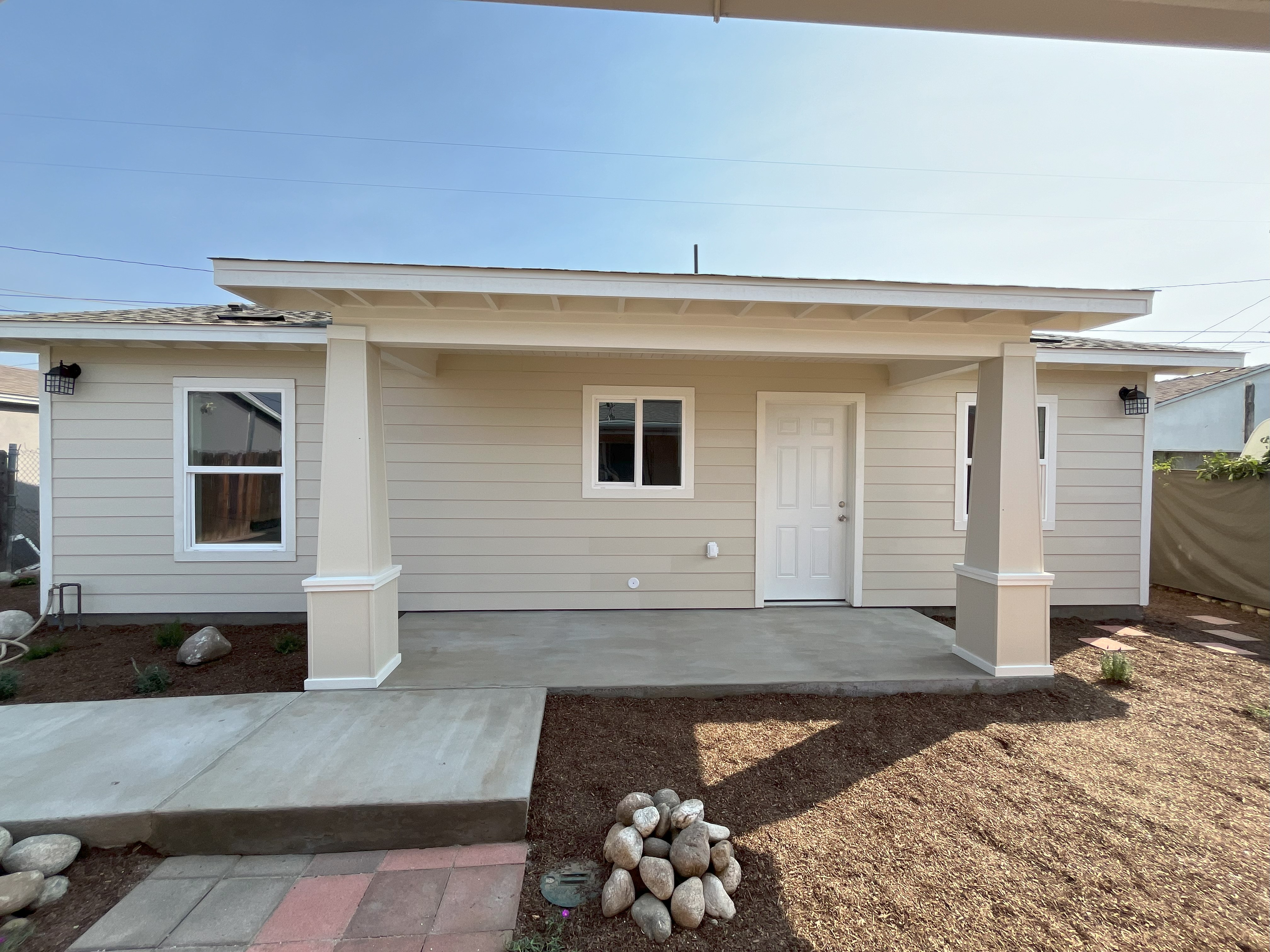
One priority for the city is new accessory dwelling units (ADUs). These backyard cottages are ideal for nimble organizations like Habitat for Humanity, as they can be built quickly and cheaply. This past summer, hundreds of community members volunteered to jumpstart the construction of a 1,000-square-foot, three-bedroom ADU.
Lasting just 10 days, the outpouring of community support allowed contractors to complete the ADU in an astonishing two months — as opposed to the usual six months.
The city also chipped in nearly $2 million in funding for the Torch Street project, a 13-unit development for low-income first-time homebuyers on land purchased by the city. The project is slated to break ground this summer.
Habitat for Humanity and the city will utilize subsidized funding to keep the mortgages affordable for buyers, which means that buyers would not have to spend more than 30% of their income to cover housing expenses like mortgage, taxes, insurance, and any HOA dues. In exchange for the low mortgage amount, the home will remain affordable for the next 45 years if sold.
Another project in the works with Habitat for Humanity, as well as San Gabriel Presbytery, is the Stewart Avenue development. Colloquially known as a YIGBY (Yes in God’s Back Yard), the project will turn a former church and school into 16 units for first-time homebuyers.
The city and Habitat for Humanity have left no slab or board unturned in their quest to bring new housing to residents. In 2021, the California Senate passed a bill requiring most cities to approve two residential units on one parcel in areas zoned for single-family housing. Baldwin Park’s first “split lot” project broke ground in February. The garage conversion behind a single-family house is now the home of a 25-year-old young professional and first-time homebuyer.
“These projects demonstrate how we are challenging the status quo in California and showing that even with all the red tape that makes it difficult to build here, you can get it done cheaply and quickly,” said Estrada.
The partnership extends beyond new housing construction. Habitat for Humanity and Baldwin Park are directing funding to address critical home repairs for low-income homeowners, such as replacing a leaky roof or building a wheelchair ramp. Since 2021, Habitat for Humanity has repaired 14 homes, utilizing $124,000 cobbled together from various funding streams, including the city.
“The goal is to help people age in place,” said Wong. “These projects are just as important to us as the new housing construction.”
One such recipient is Maria Duenas, who has owned her home for 23 years and lives there with her two daughters and three grandchildren. Her roof had developed several leaks, and her family was unable to use one of the showers. Plus, the house was often damp in the winter.
“I am so grateful that this rainy season I don’t have to be worrying about the water coming inside the house,” said Duenas.
Estrada pointed out an unexpected benefit tied to the city’s ability to fund home construction and repairs: People realize the city is there for them.
“The community increasingly sees the city as an advocate for all their needs,” Estrada said. “We have communicated directly and honestly about these housing efforts and followed through on our promises. As a result, we are getting more constituents asking for help and sending us emails inquiring how they can access certain services, not just housing.”
The bottom line is Baldwin Park is demonstrating that a city can address constituents’ number one need: safe, stable, and affordable housing. In noting the city’s recent prioritization of creating more low-income housing options, Estrada points out that losing housing can happen to anyone, no matter their income level.
“Stable, affordable housing is vital to the longevity of not only families but communities,” he said. “We could find a million ways not to build. But we're not doing that. … And in the process, I believe we are setting an example, not just for our region, but for our state.”
The Cal Cities #LocalWorks initiative shines the spotlight on examples of local actions that are making a difference to their communities. Show how #LocalWorks in your community by contacting communications@calcities.org.